
Deposits, Cancellations, and Risk: What the 2026 Booking Season Is Revealing About Live Music Contracts
We're seeing something shift in the live music sector. Bookings are up, particularly across weddings and private events. But alongside that growth, something else is rising: disputes over deposits and cancellations.
This isn't about difficult clients or bad luck. It's about contract structures that haven't kept pace with how the market actually behaves.
At Artist Republic, we work with musicians across the spectrum. Function bands, session players, tribute acts, touring shows. And right now, we're hearing the same story from different corners: more bookings doesn't always mean more security.
In fact, it can mean the opposite.
Why More Bookings Also Means More Risk
The numbers tell part of the story. Approximately 2.2 million weddings are expected to take place in the U.S. annually between 2024 and 2025. That sounds promising until you look closer.
Fewer Americans are planning to have a wedding in 2025. Just 4% compared to 7% last year. The market is volatile, and that volatility creates exposure for musicians who depend on forward bookings.
Here's what's happening on the ground: couples are slower to commit. Most now take between one and four weeks to make decisions. They're comparing more options, delaying bookings, and negotiating harder on price.
That extended decision window increases the risk period for musicians. You're holding dates. You're turning down other work. And if the booking falls through without proper contractual protection, you're left with nothing.
Concerts provide bands with 75% of their income, according to industry research. That makes live performance income critical, not supplementary. When a gig cancels, it's not an inconvenience. It's a direct hit to your livelihood.
Pollstar estimated the total lost revenue for the live music industry in 2020 at more than $30 billion from event cancellations. That's an extreme example, but it demonstrates what happens when protection isn't built into the booking process.
The Deposit Structures That Actually Protect You
Let's be clear about what a deposit is supposed to do. It's not just a gesture of good faith. It's financial commitment from both parties that reduces the risk of last-minute cancellations.
Standard practice in the industry is to request a deposit when a booking is confirmed. Typically, that's between 25% and 50% of the agreed fee.
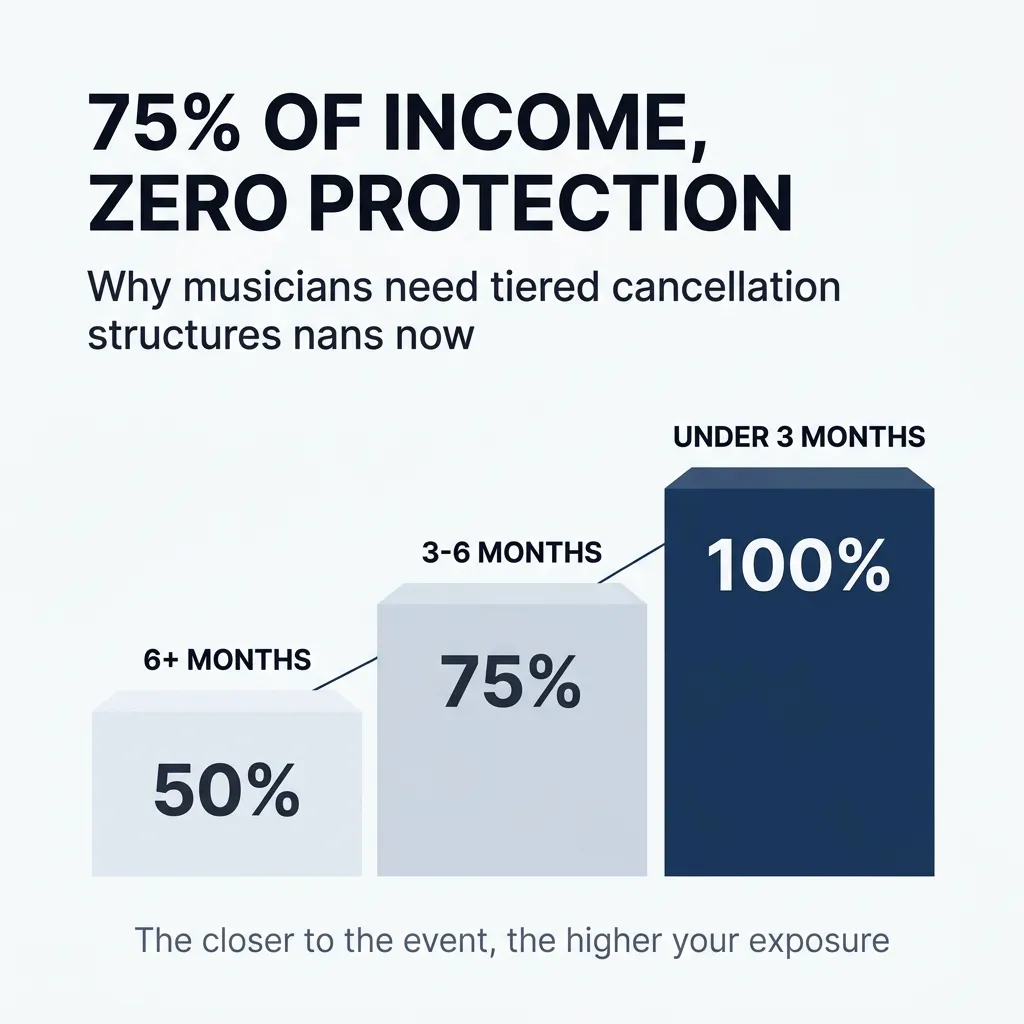
But here's where it gets more sophisticated. Professional musicians are using tiered cancellation structures that reflect the actual cost of holding a date:
- 6 months or more before the event: 50% of the total cost
- Between 6 and 3 months before the event: 75% of the total cost
- Less than 3 months before the event: 100% of the total cost
This isn't about penalising clients. It's about reflecting reality. The closer you get to an event date, the harder it becomes to fill that slot with alternative work. Your exposure increases, so the protection needs to increase with it.
These structures are becoming standard across wedding and function bookings for a reason. They work.
Popular bands with busy schedules are now requiring deposits to guarantee their services. It's not common for small venues yet, but the trend is moving in that direction. As the market professionalises, these terms become the baseline, not the exception.
Where Most Musicians Still Get Caught Out
Here's the uncomfortable truth: many musicians are still operating on informal agreements.
Verbal contracts. Handshake deals. Email confirmations without proper terms attached. These arrangements leave you exposed in ways you might not realise until something goes wrong.
Without a legally binding contract, bands can be deceived into performing for free. This can happen even when a promoter has verbally agreed to pay. Verbal contracts are valid in many cases, but the problem is proof.
When a dispute arises, you're left trying to demonstrate what was agreed. That's difficult. Often impossible.
The other common mistake: deposits without clear cancellation terms. You take a 25% deposit, but there's no written agreement about what happens if the client cancels. Are they entitled to a refund? Under what circumstances? What if they want to reschedule?
Without those terms in writing, you're negotiating from a weak position. And in most cases, you'll end up returning the deposit just to avoid conflict.
That's not protection. That's theatre.
💡 Key point: Structure your deposits and staged cancellation fees carefully so they're reasonable and enforceable under UK law. Use clear clauses around non-refundable deposits and cancellation fees. Make sure your contract aligns with UK law around cancellation fees and service agreements to remain enforceable.
How to Reframe Your Terms Without Losing Work
There's a concern that stricter contract terms will put clients off. That formalising your agreements will make you seem difficult or inflexible.
We've found the opposite.
Clients respect clarity. They want to know what they're committing to, and they want to know you're serious about the booking. A well-structured contract signals professionalism, not suspicion.
The key is how you present it. Don't apologise for having terms. Don't frame your contract as a necessary evil. Position it as protection for both parties.
Because that's what it is.
When you send a contract, include a brief explanation of why these terms exist. Make it clear that deposits protect the booking, that cancellation fees reflect the cost of holding a date, and that you're building a structure that allows both sides to plan with confidence.
Most clients understand this. The ones who push back are often the ones you'd rather not work with anyway.
Here's what we recommend including in every contract:
- Clear deposit terms: Amount, when it's due, and whether it's refundable
- Tiered cancellation structure: Fees based on how far in advance the cancellation occurs
- Payment schedule: When the balance is due, and what happens if it's late
- Rescheduling policy: What happens if the event moves, and who bears the cost
- Force majeure clause: What happens in the event of circumstances beyond either party's control
You don't need a 20-page document. You need a clear, readable agreement that covers the scenarios that actually come up.
And here's something else worth noting: wedding entertainment has officially become one of those non-negotiables. Demand for professional acts is high, with 300+ weddings and events every year requiring quality performers.
That gives you leverage. Not to exploit clients, but to set terms that protect your business.
What This Means for the Industry
The professionalisation of live music isn't just about better marketing or slicker branding. It's about business practices that safeguard financial interests.
Clear, written agreements between producers and musicians are essential to protect your rights, credits, income, and creative control. A solid contract doesn't just set expectations. It protects your revenue, your reputation, and your ability to deliver on the night.
We're seeing this shift across the industry. Not just with the bands we manage, but across venues, promoters, and booking agents. The informal approach is being replaced by structured agreements because the cost of not having them is too high.
If you're still operating without proper contracts, you're not just behind the curve. You're exposed.
What We're Doing About It
At Artist Republic, we've made contract clarity a core part of how we work. Every artist we manage operates with standardised terms that protect their income and give clients confidence in the booking process.
We've built relationships with legal partners who specialise in entertainment contracts. We stay current on UK law around cancellation fees and service agreements. And we make sure every agreement we issue is enforceable, clear, and fair.
This isn't about being difficult. It's about being professional.
And it works. Our artists report fewer disputes, clearer communication with clients, and more confidence in their forward bookings. That's the result of getting the structure right at the start.
If you're a musician reading this and you're still working without proper contracts, it's time to change that. Not next season. Now.
The market is shifting. Bookings are increasing, but so is complexity. Clients are more cautious, decision windows are longer, and the financial stakes are higher.
You need protection that matches the risk. And that starts with the contract you send before the booking is confirmed.
Final Thought
More bookings should mean more security, not more exposure. But that only happens when your contract structures reflect the realities of how the market actually behaves.
Deposits, cancellation fees, and clear payment terms aren't obstacles to getting work. They're the foundation of sustainable income.
Get them right, and you're building a career. Get them wrong, and you're gambling with every booking you take.
We know which approach works.