
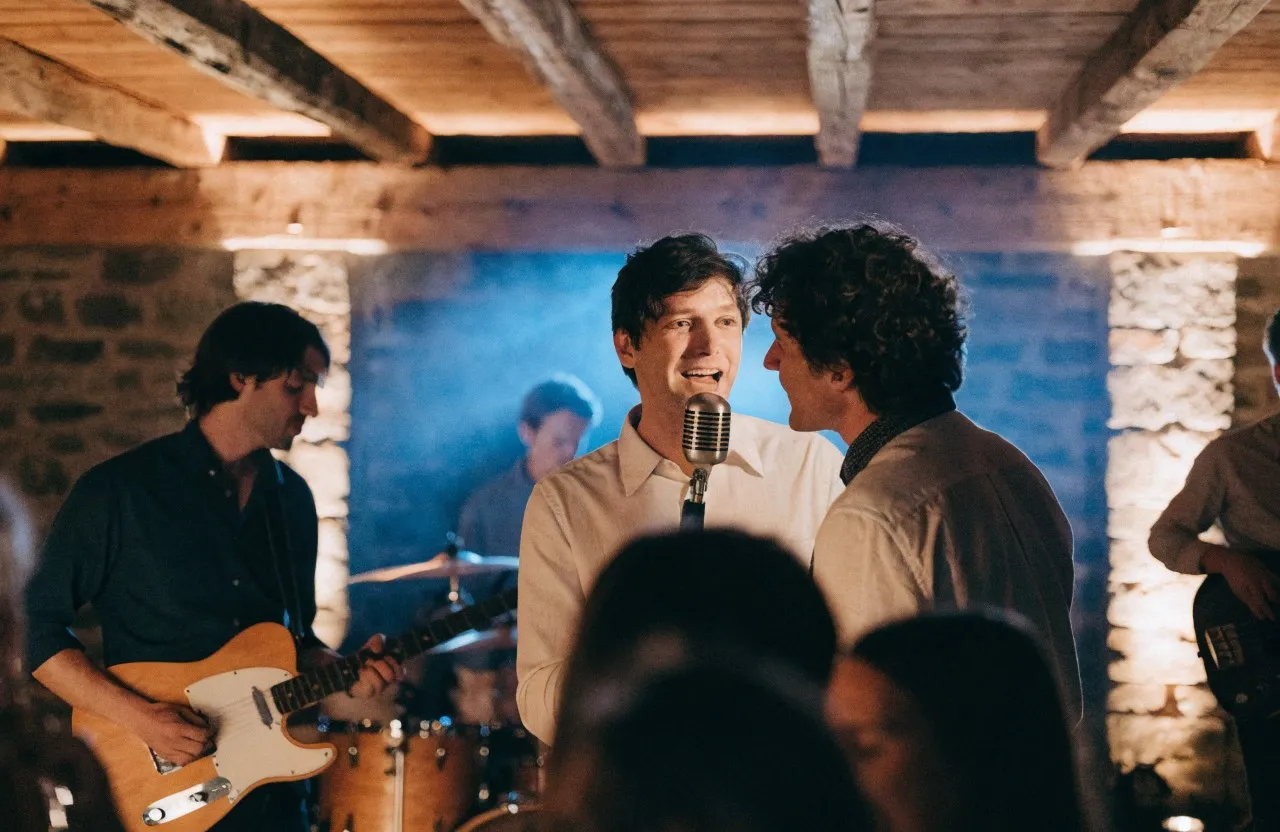
Luke Combs Sold Out Wembley Three Nights Running. Your Set List Has Not Caught Up.
Across the last weekend of July and the first of August, Luke Combs played Wembley Stadium three nights running and sold every seat. Ninety thousand people a night, two hundred and seventy thousand across the run, singing American country music back at an American country singer in north west London. Guinness World Records certified him as the first solo country artist ever to headline the stadium. For most of the British music industry it registered as a story about one artist having a very good week. For anyone who earns a living playing weddings, corporate dinners and private parties, it was something considerably more useful. It was a large, public, unambiguous signal about what the people who book you have been listening to on the drive home.
Three nights at Wembley changed what British audiences expect
Country has had a British audience for decades, but it has been a contained one. C2C at the O2 gave it an annual weekend. Specialist radio gave it a slot. The touring circuit gave it academies and the occasional arena. What it did not have was the thing that changes a genre's relationship with the general public, which is a stadium full of people who did not think of themselves as country fans until they found themselves in one.
That distinction matters more to function musicians than to anyone else in the industry. The function economy does not run on discovery. It runs on recognition. A song works in a wedding room because a hundred and twenty people who have never met each other all know the second line. Nothing converts a genre from niche to bookable faster than a stadium event, because a stadium event is how a song stops belonging to its fans and starts belonging to everybody. Three nights at ninety thousand is not a gig. It is a licensing event for public familiarity.
The numbers behind the boom are not a blip
The UK Country Music Association's State of the Nation report put UK country consumption growth at 10.9 percent in 2025, the fastest of any market in the world and roughly twice the rate of the overall UK music market. Quarterly streams passed a billion. The Country Music Association separately reported consumption growth of 40 percent across a twelve month period when the UK country radio airplay chart launched. The genre now holds around 2.1 percent of total UK music consumption.
John Finch, Chair of the UK Country Music Association, put the position plainly: "There is no doubt that country music in the UK is steadily becoming mainstream, but there is still a way to go."
He is right on both halves of that sentence, and the second half is where function musicians should pay attention. A 2.1 percent share sounds small, and as a measure of the recorded music market it is. But function work is not sold by market share. It is sold by whether a room will sing. A genre can hold a tiny slice of national streaming and still own three or four songs that every guest at a wedding in Yorkshire can finish the chorus of. That is the only metric that pays you.
Wedding song lists have not caught up with the charts
Here is the gap. FixTheMusic's 2026 ranking of the seventy five most requested wedding songs, built from real band and couple data rather than editorial preference, does not contain a single contemporary country record. No Combs. No Zach Bryan. No Morgan Wallen. The list runs on pop, soul, rock and standards, which is close to what it ran on five years ago.
That lag is not laziness. It is structural. Couples choose from what bands advertise, and bands advertise what couples have historically chosen, so repertoire updates slowly and by consensus. Add to that the risk profile of the work. A wedding is a single evening with no second attempt, so the incentive is to play what is proven rather than what is rising. The result is a repertoire that reflects demand from three years ago with reasonable accuracy and demand from this summer barely at all.
For an individual band, a market wide lag is not a problem. It is an opening. The songs are already familiar to the audience and are not yet on the standard list, which is the narrow window in which adding repertoire actually differentiates you rather than simply keeping you level.
The practical question is which songs. Beautiful Crazy has been functioning as a first dance for several years without appearing on many band repertoire lists, and Combs's version of Fast Car carries the additional advantage that the room knows the Tracy Chapman original as well. Zach Bryan's Something in the Orange and Megan Moroney's Tennessee Orange both built streaming audiences far larger than their British radio play would predict, which is usually the point at which a wedding audience recognises a song without being able to say where from. Beyond the recent material, the older repertoire still earns. Wagon Wheel and Shania Twain's catalogue have been quietly reliable in British function rooms for years, and their presence is a reasonable argument that the appetite predates the stadium.
What playing country properly demands from a function band
The window closes badly for anyone who treats this as a cosmetic addition. Country punishes approximation more than most genres a function band covers, because so much of what identifies it lives in performance rather than in the chords. The chords are usually simple. That is the trap.
Three things separate a credible version from an embarrassing one. The first is harmony. Modern country stacks vocals in thirds and fifths as standard, and a band with one strong lead and no working harmony singers will sound thin in a way that pop material forgives and country does not. The second is guitar tone. A clean Telecaster with compression, and ideally something approximating pedal steel behind it, is not an optional flavour. It is the sound of the genre. A humbucker through a rock preset will read as a covers band attempting country, which is worse than not attempting it. The third is the drummer, who has to sit behind the beat rather than pushing it, and who has to resist the instinct to fill.
Vocal delivery is the fourth thing, and the one most often got wrong. Country lead vocals are conversational. Belting a Combs song the way you would belt a soul number removes the thing that makes it work. Bands that cannot do this well should either invest the rehearsal time properly or leave the genre alone, because a poor country cover is unusually obvious to a room.
How to price the songs you decide to add
Adding four or five country numbers is a rehearsal cost, not a new product. It does not require rebranding, and bands that rebrand as country acts on the back of one stadium run are making a much larger bet than the evidence supports. What it does require is that the addition is visible, because a song you can play but never mention generates no enquiries at all.
That means the repertoire list, the website, the showreel and the agency profile all need updating together. Management and agents can only sell what they can see. If the material sits in rehearsal and nowhere else, it converts nothing. Bands already working the wedding circuit will recognise this as the same discipline that determines whether the rest of their repertoire earns, a point we made in our look at the wedding gig economy.
The corporate side of the diary deserves separate thought. Themed events, awards dinners and Christmas parties run on a much shorter decision cycle than weddings, often booked inside eight weeks, and event organisers chase cultural currency in a way couples do not. A band that can offer a country set as a distinct option, rather than four songs buried in a general set, is selling something an event organiser can put in a brief and justify to a budget holder. That is a different conversation from a wedding enquiry and it tends to be a better paid one.
On price, the sensible position is that four songs do not justify a higher fee on their own. What they justify is a better conversion rate and a stronger position on shortlists, because being the only act on a couple's list who can credibly deliver a country first dance is worth considerably more than an extra hundred pounds on the quote. Fee increases follow demand. Demand follows being asked for by name.
Wembley did not create appetite for country music in British function rooms. It confirmed an appetite that streaming figures had been describing for two years and that set lists had been ignoring. The bands who treat the next twelve months as a repertoire question rather than an identity question will spend the season answering enquiries that everyone else is not receiving. That is the whole opportunity, and it will not stay open indefinitely.