
Which Oasis Songs Every Wedding Band Should Play
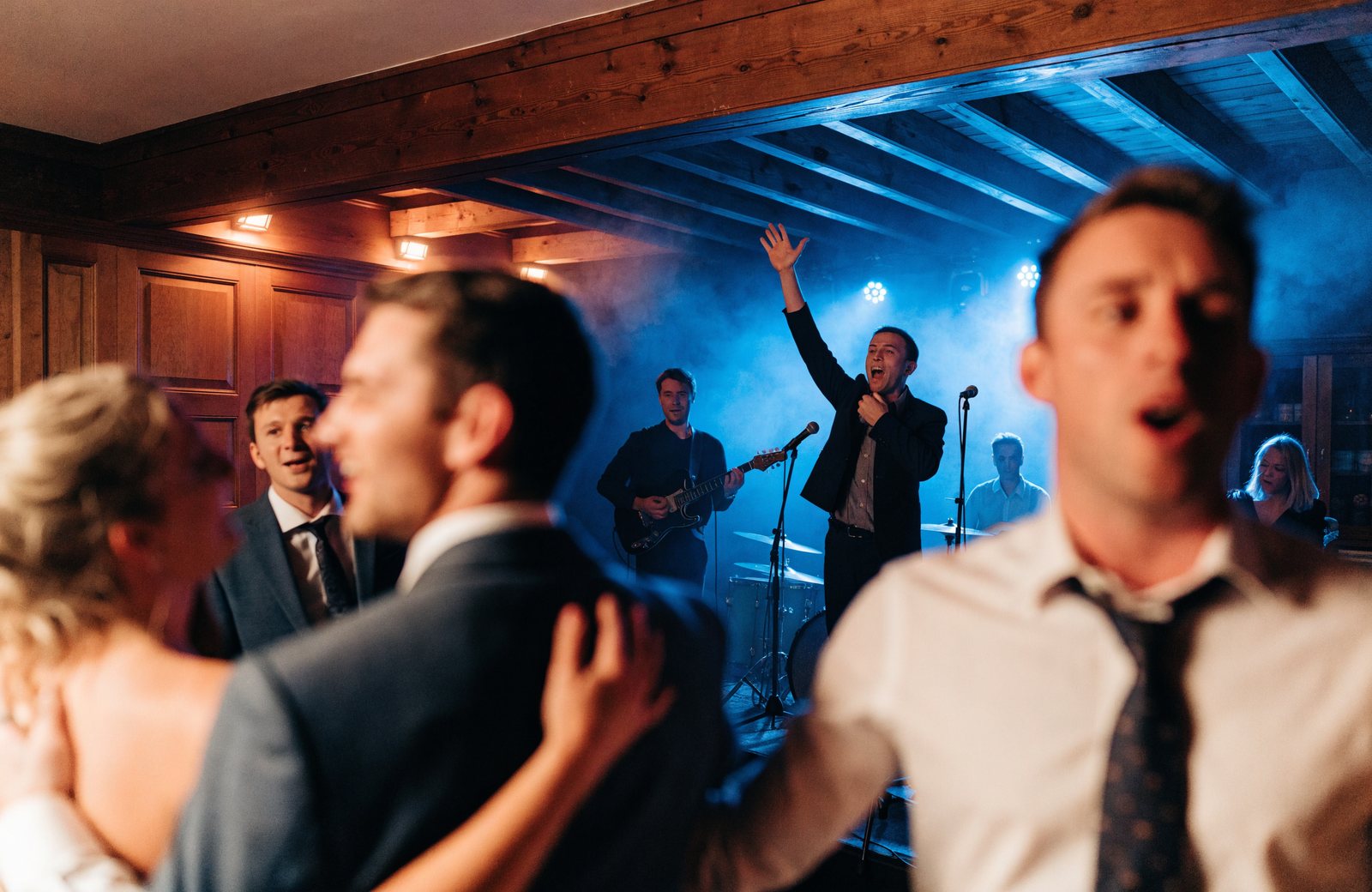
Somewhere around ten o'clock at a British wedding, a man in his forties loosens his tie, throws an arm around a cousin he sees twice a year and waits for the chorus he has been shouting since 1996. If the band gives it to him at full size, the room tips over. If it gives him a thinned out, transposed version that stalls in the second verse, the dancefloor drifts towards the bar and rarely comes all the way back.
Oasis sit in that moment more reliably than almost any other British band. The reunion tour that opened at Cardiff's Principality Stadium in July 2025 did not create the demand for their songs at weddings; it reminded a generation of guests how much of that catalogue they still know word for word. When we asked last year who the Oasis comeback was really aimed at, the answer was the same people who now book, pay for and dance at most of the weddings our bands play.
For a working wedding band, that makes Oasis less a stylistic choice than a commercial obligation. The useful question is not whether to play them, but which songs, at what point in the night, and in what shape. Our position is that five Oasis songs earn a permanent place in any wedding band's repertoire, that each of the five does a different job, and that bands who treat them as interchangeable crowd pleasers waste most of what they can do.
Don't Look Back in Anger belongs at the very end
Released in February 1996, Don't Look Back in Anger became the band's second UK number one and the first Oasis single with Noel Gallagher rather than Liam on lead vocal. Thirty years on, it is the closest thing British weddings have to a communal anthem that nobody needs teaching. Guests who could not name a second Oasis album track will sing every line of the chorus, including the ones about Sally.
There is a reason for that grip. Berklee professor and musicologist Joe Bennett, speaking in a radio interview reported by Berklee in September 2024, explained that legacy acts sell because audiences are shaped by the music they heard between the ages of 12 and 25, a pattern psychologists call the reminiscence bump. "You're very susceptible to the pop music from that formative period," he said. A guest who was 12 when this single topped the chart is in their early forties now, which puts them squarely among the parents, uncles and older friends who decide whether a wedding dancefloor fills.
That is why the song belongs in the final ten minutes and nowhere else. Played early, it spends the room's biggest singalong before the night has earned it. Played last, or as the encore after a staged finish, it gives the band a moment where the vocalist can step back from the microphone for a chorus and let two hundred people carry it. Keep it in the original key of C major, keep the piano introduction, and resist the temptation to extend the outro once the room has sung itself out.
Wonderwall works hardest when the band refuses to rush
Wonderwall reached number two in the UK in late 1995, held off the top by Robson and Jerome, and has since become the song every acoustic guitarist at every party reaches for. That familiarity is the problem a wedding band has to solve. Guests have heard it strummed badly around a firepit a hundred times, so a band version that sounds like the firepit version adds nothing.
The record is not a strummed acoustic song. It has a rolling, insistent drum part, a cello line, and a vocal pitched high enough that Liam Gallagher sounds as though he is pushing against it. Bands that play it faster than the record, or drop it a tone to spare the singer, remove exactly the tension that makes the chorus land. The better approach is to play it at record tempo with the full band from the second verse onwards, let the guitarist keep the capo on the second fret, and trust the lead vocalist to hit the top of the chorus.
Its job in the night is to build, not to peak. Wonderwall works best in the middle of the first evening set, after the first dance and the opening floor fillers, when guests who have not yet danced are looking for a reason to stand up. It is familiar enough to pull them in and restrained enough to leave headroom for what follows.
Live Forever gives the first set its emotional turning point
Live Forever was the band's first top ten single in the summer of 1994, peaking at number ten, and Noel Gallagher has described writing it partly as a reply to the despair running through American grunge at the time. That optimism is what makes it quietly perfect for a wedding. It is not a love song, so it avoids the syrup of a first dance, yet its central line about living forever lands differently in a room full of people who have just watched two friends make promises to each other.
Musically it sits in G major, a comfortable range for most male lead vocalists and one that rarely needs transposing. The guitar solo is short, melodic and recognisable, which gives the lead guitarist a moment in the spotlight without turning the song into a showcase. For bands with a strong rhythm section, the slow build of the drums through the first verse is the key detail to get right.
We place Live Forever at the close of the first evening set. It sends guests into the break on a high, with the chorus still in their heads, and it makes the second set feel like a continuation rather than a restart. Bands that close the first set on a novelty track or a fast pop cover often find the room slower to return after the buffet.
Champagne Supernova needs an edit before it reaches the dancefloor
Champagne Supernova closes the 1995 album (What's the Story) Morning Glory? and runs to seven minutes and twenty seven seconds. It was never released as a single in the UK, yet Warble Entertainment places it fourteenth on its list of the most requested cover songs for wedding bands, well ahead of Wonderwall. Guests request it because it is the song they remember from festival fields and student nights, the one they sang with their arms in the air.
Played in full, it will lose a wedding room somewhere around the fourth minute. The long instrumental passages that work in a stadium become dead air in a hotel function suite. A good wedding band arrangement cuts it to around four and a half minutes: one verse, two choruses, the bridge, and an outro that extends only if the room is still with the band. The musical director should agree that edit in rehearsal and signal any extension on the night, rather than improvising it.
Its place is late in the second set, just before the closing run. By then, the guests who have stayed on the dancefloor are the ones most likely to have known this song at nineteen, and the slower tempo gives them a breather that still feels like part of the celebration.
Half the World Away belongs outside the evening set entirely
Half the World Away first appeared as the B side to Whatever in December 1994, then found a second life as the theme tune to The Royle Family, and a third when Aurora's cover soundtracked the John Lewis Christmas advertisement in 2015. That gives it an unusual advantage: two generations know it, in two different forms, and both versions suit an acoustic setting.
The mistake is putting it in the evening set, where its gentle tempo and wry lyric stall a dancefloor. Its natural home is the drinks reception, the wedding breakfast or the moment the couple leave the ceremony. An acoustic duo or a stripped back trio from the evening band can play the original for guests who remember The Royle Family, or lean towards the Aurora arrangement for couples who know it from Christmas television. Either way, it signals to the older half of the room that Oasis will feature later, without spending any of the evening's energy.
For bands that offer an afternoon package, this is one of the most useful songs in the catalogue. It is recognisable within two bars, it sits well at conversational volume, and it bridges the ceremony and the party in a way few other songs of the period manage.
These five leave out plenty. Supersonic, Roll With It, Whatever and Stop Crying Your Heart Out all have their champions, and a couple with a particular favourite should hear it played properly. But a band that learns these five, arranges each one for its moment and places them where they belong has most of what Oasis can do for a wedding: an acoustic afternoon, a mid evening lift, a first set close, a late singalong and a finish the room will still be humming in the taxi. That is not a tribute set. It is a working structure for the night, and the couples paying for it notice the difference.